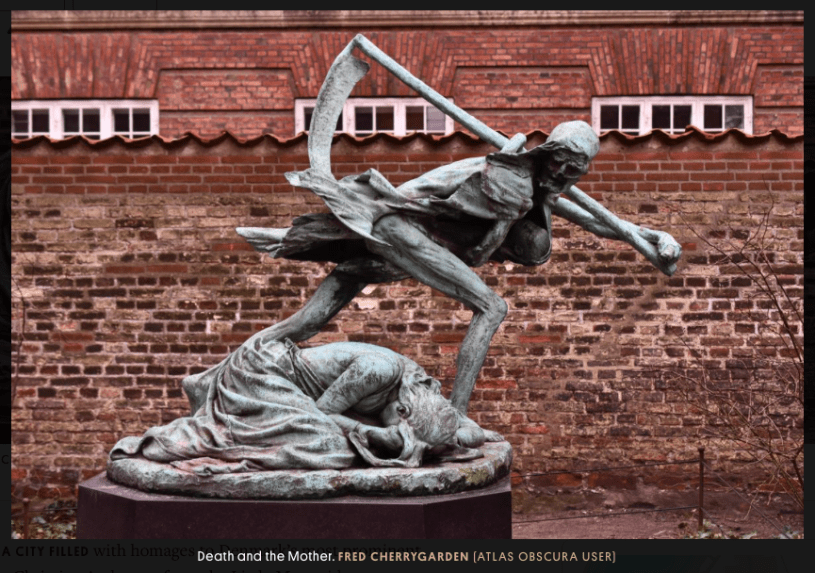
In H-C Andersen’s fairytale The Story of a Mother, the unnamed mother hunts down the old man Death to bargain for the life of her child. On the way she gives her blood, her eyes and her long black hair in return for directions to Death’s Greenhouse, where people’s lives grow as plants until Death takes them to the Unknown Land. Death lets the mother see two plants: one “a blessing to the world, for it was so kind and happy”, the other “held only sorrow, poverty, fear, and woe” – but he won’t say which is the child’s. The mother, fearing that it’s the second, countermands her own prayers, whereupon Death takes her child off to the Unknown Land.
This deceptively trite story grows in existential dread as you consider it. In 1892 the sculptor Niels Hansen Jacobsen did just that, coming up with a deeply horrifying maquette entitled Death and the Mother. Nine years later it was cast in bronze to stand in front of the Helligåndskirk in Copenhagen. But in 1966 the locals had it banished elsewhere for being “profoundly depressing”.
My first reaction on hearing this story was contempt for folk who didn’t appreciate true Art. But after contemplating the above photo of the sculpture, I feel that in the end I too would protest if it were erected outside my front door.
 Whitby Writers Group