In those days there was no such thing as bread;
whoever wants to eat baked, yeasty porridge?
In those days there were no such things as textiles;
why sit there knotting twisted strings forever
when there is hide of cows, fur, bark and plumage?
In those days there was no fired pottery;
why ruin precious vessels in the flames
when hot stones dropped in water serve to boil it?
In those days there were no such things as bricks;
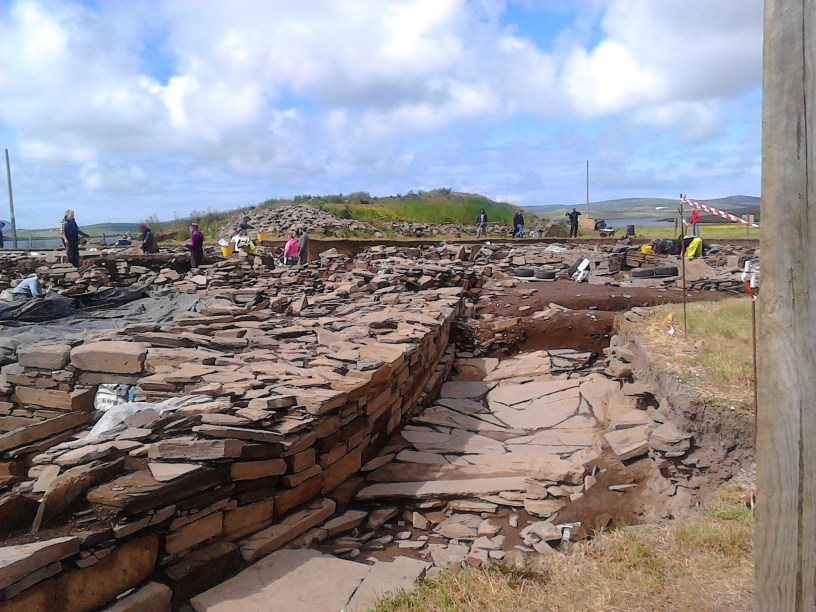
limestone pavements, levered-up and lifted,
neatly break in sections, ready-squared,
so houses can be built of stone, not timber.
In those days there was no such thing as metal;
why sweat the blood from white-hot rocks and stones
when there is antler, wood, flint, stone and bone
for making cunning tools and sturdy weapons?
In those days there were no such things as arrows;
why shoot a missile from a cowardly distance
when a strong man closes with his foe,
subduing him with axe and spear and hammer?
In those days there were no such things as kings;
why set a man to lord it over others
when elders always reach a wise decision
after long debating sat in council?
On a windy island with no woodlands,
walls were raised and roofs were thatched in stone.
People from the mainland came to visit;
borne on rowing boats of hollow logs.
They prized the things Orcadians could offer:
cosmetics, dyestuffs, pigments, medicines.
The islanders received their forest produce:
flowers and fruits they could not grow themselves.
Then came a time when climate overwhelmed them.
Mounds were raised above abandoned structures—
their workshops, factories, laboratories,
first having piled up heaps of offerings
to slake the thirst of fell ancestral spectres.
Then passed a thousand years before the time
folk rediscovered how to manufacture
goods made by the Orcadians long ago.

